
How Arrest Warrants Work in Campbell County
Virginia Code §19.2-72 sets the threshold. A sworn complaint goes to a magistrate first. The magistrate reviews it for probable cause, then signs a warrant naming the accused and the alleged offense. That signature directs an arrest. A public court search might later show the case yet leave the warrant itself hidden. In Campbell County, magistrates sit in the 24th Judicial District. The clerk of the relevant court keeps the file, and the Sheriff's Office serves papers county-wide. So a court event on a docket is not proof that a warrant remains active today.
Campbell County Magistrate Issuance Starts With a Complaint
The official magistrate page explains the full scope of that office. It issues arrest, search, and civil warrants and rules on bail and commitment. Issuance is more than a listing online. A sworn complaint, a probable-cause finding, a judicial signature, and a later return all belong to the sequence. Campbell County Judicial Services posts magistrate availability around the clock. Its after-hours contacts are an intake route only, not a public warrant lookup and not a promise of recall. Call the official number for current routing when something cannot wait for regular court hours. Judicial officers and the issuing court control both issuance and any later case action. The Campbell Judicial Services page gives the official local description.
Arrest Warrants: What They Contain
A blank process form carries certain fields. Expect the court name, case caption, the person charged, the alleged offense, complainant or oath fields, the issuing officer, and space for service and return. Some records add bail terms and a hearing or return date. Public OCIS does not display every field on the signed paper. Campbell County publishes no universal warrant-number pattern or bond amount. Use the case number to reach the right clerk and ask what the public entry actually means. A similar name proves nothing, and not every field is open to view.
| Issuing court | Shows which clerk keeps the case file. |
|---|---|
| Charge or offense | Names the alleged basis recorded on the process. |
| Judicial signature | Identifies the issuing authority on the paper. |
| Service and return | May show execution, attempt, or return to court. |
| Bail terms | Follow the case-specific order; no countywide amount is published. |
The Virginia Courts criminal-form directory shows blank form types only.
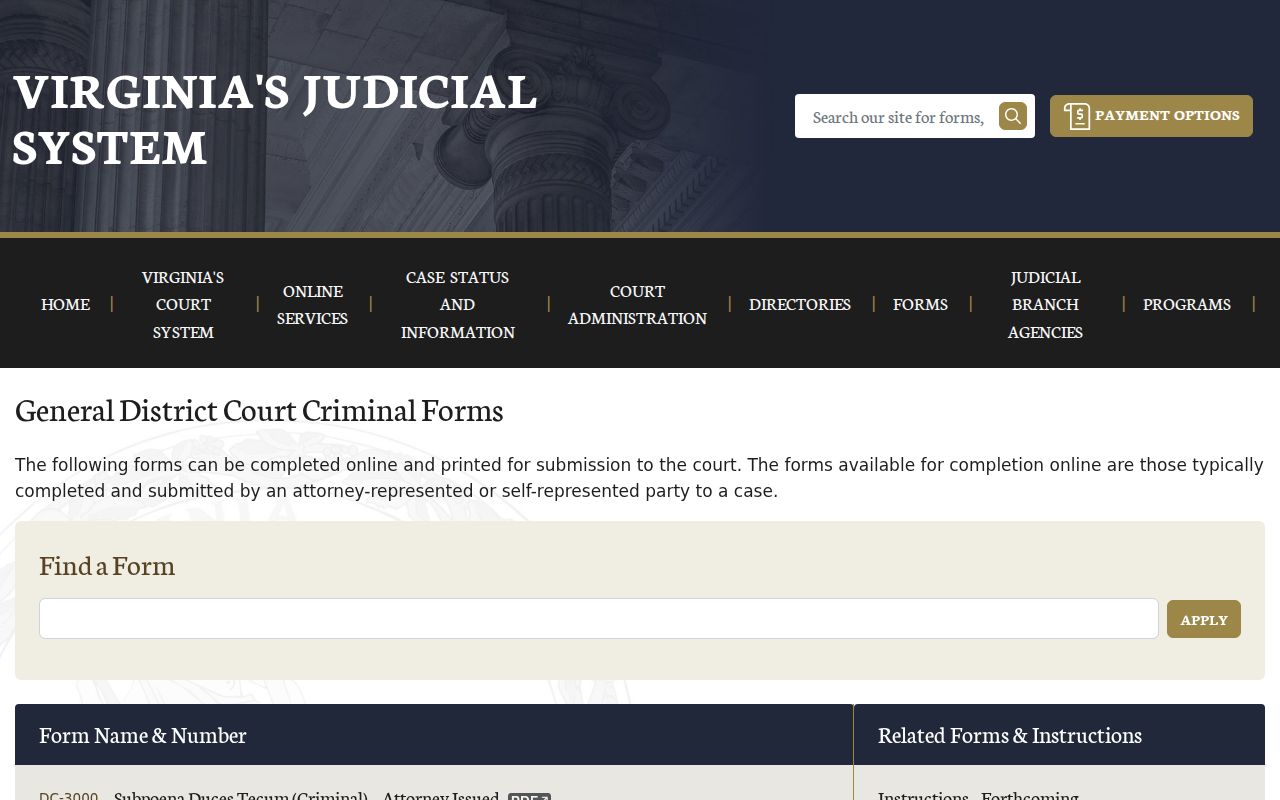
Blank forms explain structure, not any person’s case.
How Warrants Get Served in Campbell County
The Campbell Sheriff's Office serves criminal warrants across the county and its two incorporated towns. Virginia Code §19.2-76 allows execution anywhere in the state and requires an execution date and a return to the judicial officer. A town officer may handle a local matter. The case file stays with the issuing court either way. The Sheriff's Court Security Unit secures the Circuit, General District, and JDR courts and transports people to and from courts and facilities. Those duties are related but distinct from warrant service and case-file access. The county's Court Security Unit page outlines this operational role. For case status in Campbell County, ask the clerk of the court named on the process.
Arrest Warrants, Summonses, and Bench Warrants
Each document does something different. An arrest warrant follows a sworn complaint and a probable-cause decision. A summons tells a person to appear without the same immediate custody command. A bench warrant or capias usually follows a missed date or a court-order issue. In Campbell County, the document's title and court matter because the next step differs by type. A search-warrant affidavit, by contrast, targets a place, person, or thing to be searched, and it is not an arrest roster. Virginia Code §19.2-54 sets a separate public timing rule for affidavits after execution, with sealing possible for good cause.
| Process | Reason | Local verification |
|---|---|---|
| Arrest warrant | Complaint and probable cause | Issuing court and Sheriff service route |
| Summons | Notice to appear | Court shown on the paper |
| Bench warrant or capias | Missed appearance or order issue | Clerk for the court that set the obligation |
Campbell County Arrest Service Counts Are Not a Roster
The Campbell County Sheriff's annual reports tally warrant service for the year. The 2024 report counts 1,693 arrest warrants served. For 2023, the total was 2,407 served, with 147 more left unserved because the sheriff could not find those subjects. Those are workload numbers, not a warrant list. A warrant left open in one year may be served later or resolved by the court, so the old unserved figure says nothing about any outstanding warrant today. The county's own annual-report index is the place to read these totals, and no office here treats them as a current roster.
Campbell County publishes the reports by year. The dates belong with every figure.
Campbell County Court Records Follow the Issuer
Records follow the court that issued them. Adult misdemeanor and traffic questions generally route to Campbell General District Court and its clerk at (434) 332-9546. Felony and Circuit matters go to the Circuit clerk at (434) 332-9517. Juvenile and domestic-relations matters belong to JDR at (434) 332-9555, subject to confidentiality rules. A town police department may have made the arrest, but it is not the clerk for the case. Start with the state case portal for a preliminary search, then contact the court named in the record. If an entry is missing, ask the clerk whether another court or a restricted record explains the gap. The Campbell Circuit Court page posts its official contact and schedule.
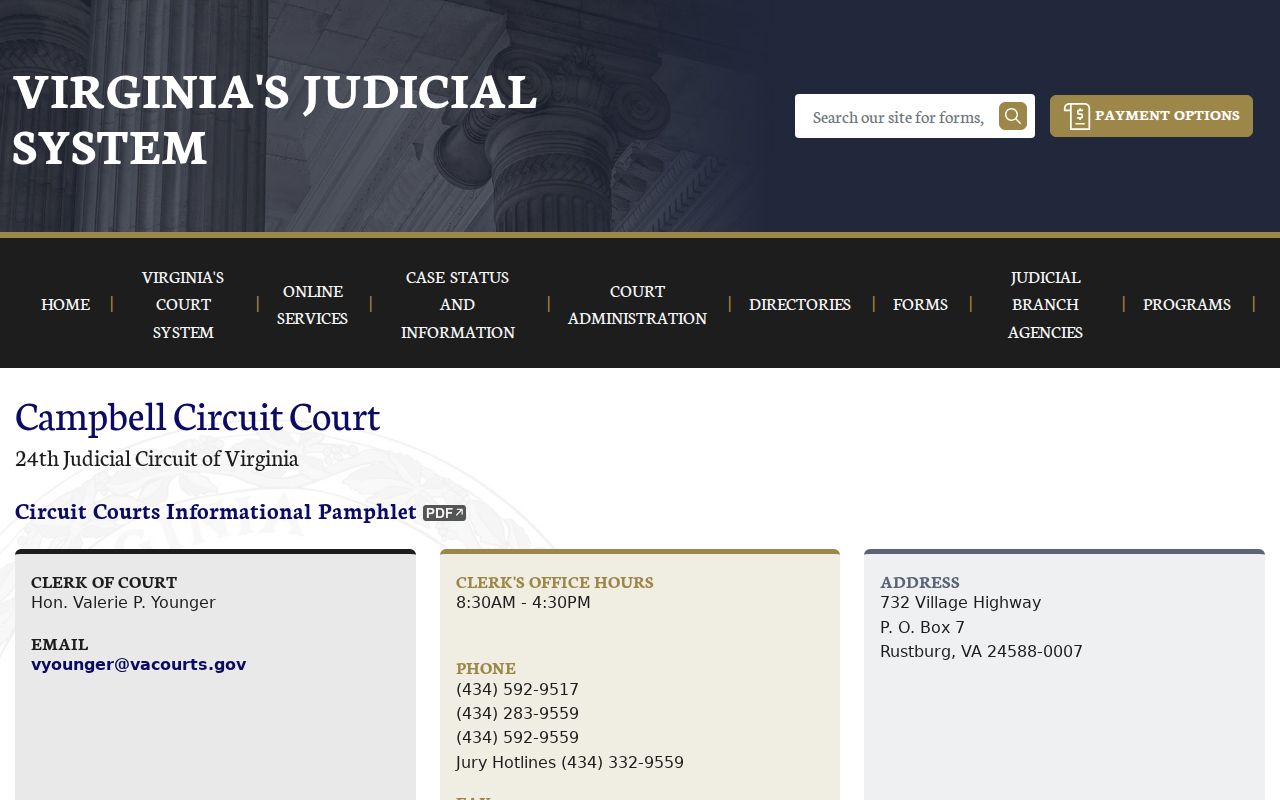
Do not treat the courthouse cluster as one shared file system.
Federal Warrants Use a Separate Route
Federal matters in Campbell County take a different road than local ones. The Western District of Virginia, Lynchburg Division, handles federal criminal cases here, with the U.S. Marshals Service tracking fugitives. The Campbell Sheriff and the Virginia OCIS portal play no part in that system. PACER opens federal dockets to the public. It is not a live fugitive roster, though, and sealed matters may not show up at all. The federal court publishes its Lynchburg courthouse location plus a probation contact. The Marshals Service keeps a separate district fugitive line. A Campbell County case search will not confirm federal status, and a federal docket search is no stand-in for a lawyer's advice. The Western District of Virginia courthouse page lays out the Lynchburg route.
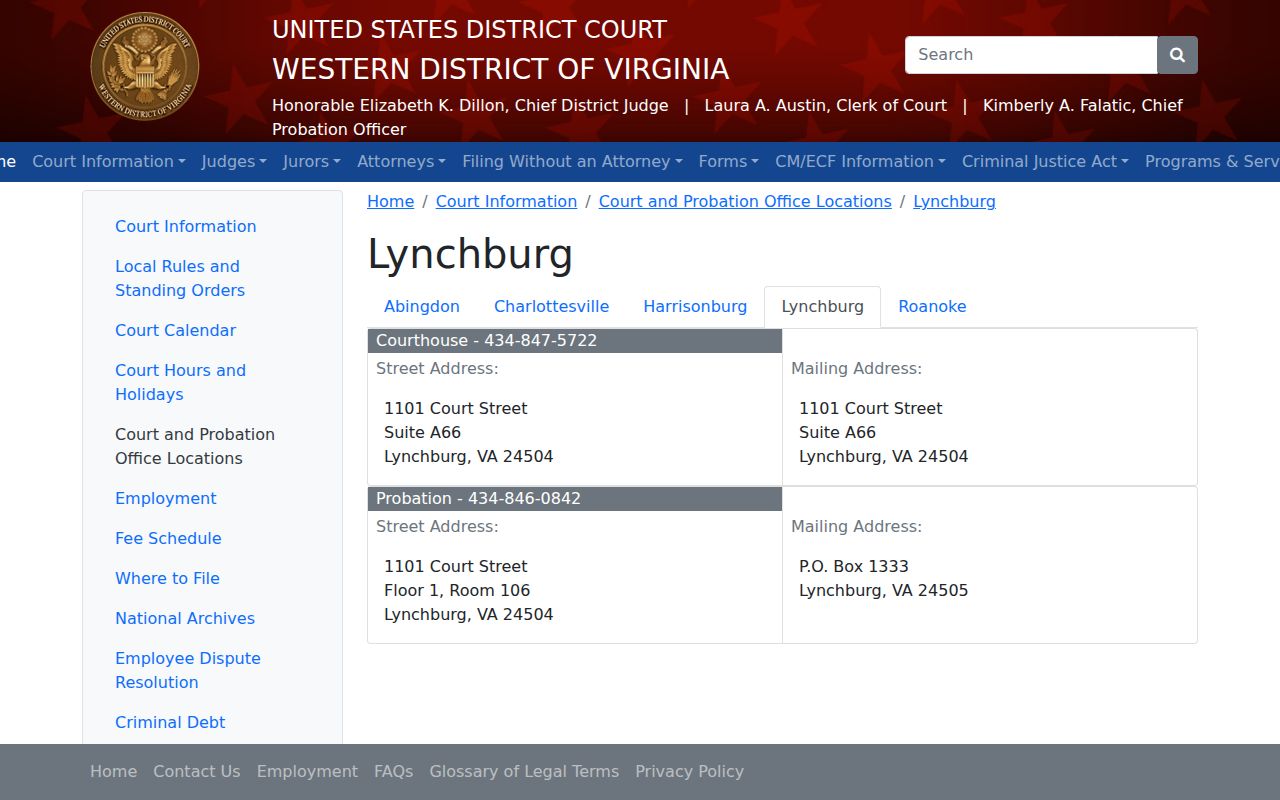
Use federal offices for federal-process questions.
Campbell County Federal Dockets Have Access Fees
PACER is not free, and the fees are worth knowing before you pull anything. The service charges ten cents per page, with a three-dollar cap on any single document. If your quarterly total sits at or below thirty dollars, you pay nothing at all. Free access also applies at courthouse terminals under separate rules, so check the official terms before you retrieve a case file. None of this buys a public list of every federal arrest warrant, though. Sealed filings stay hidden, and questions about federal process belong with the U.S. Marshals Service or the federal court. Campbell County offices, by contrast, handle local and state matters. The PACER fee page lays out the document charges themselves.
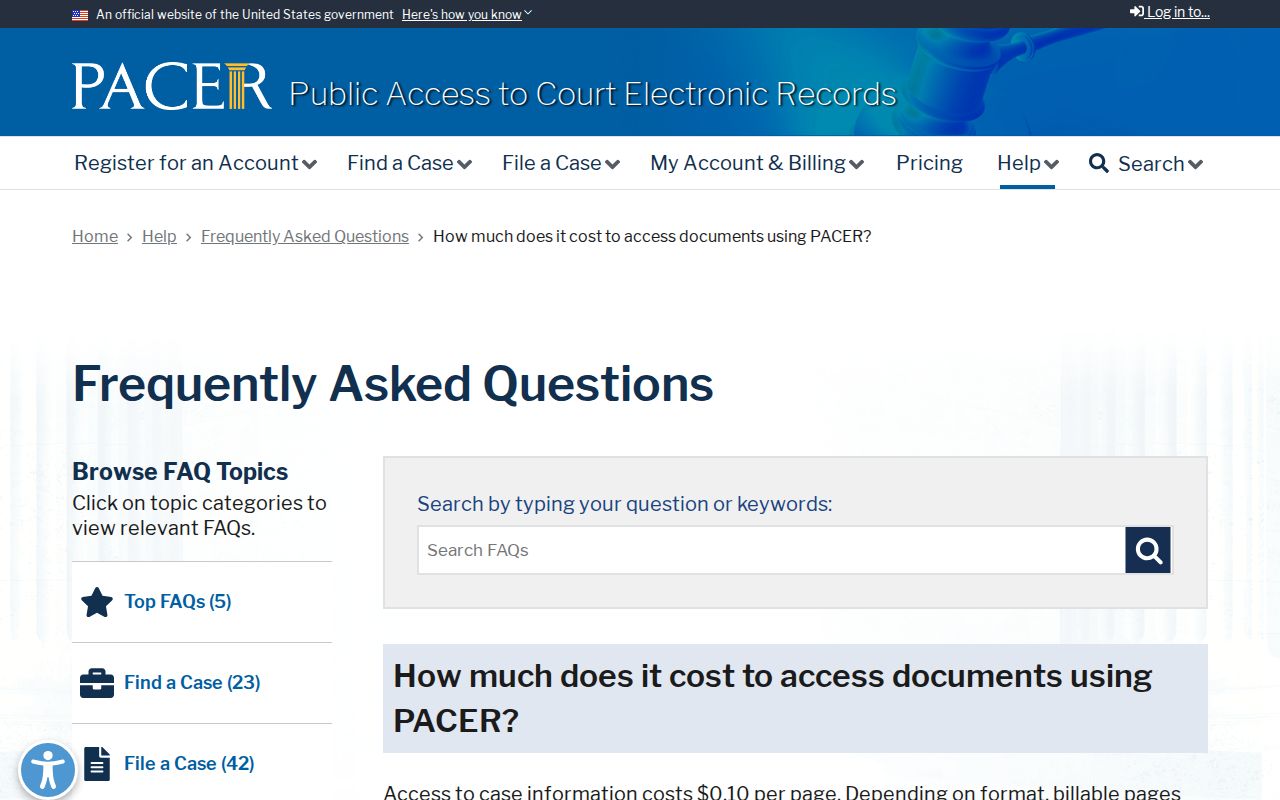
Fees and access rules can change; consult PACER directly.
Handling an Arrest Warrant in Your Name
Found a public case result with your name on it? Write down the court and the case number, then call that clerk. Ask what the entry actually is, since a hearing, capias, warrant, and return are different things. If a criminal arrest warrant might concern you, talk to a Virginia lawyer before you show up anywhere. Campbell County publishes no universal surrender schedule, no recall form, and no countywide bond amount. The Sheriff can still explain how local service is routed. A magistrate may set initial bail or commitment, while the issuing court handles later relief. For first steps and county contacts, see the Campbell County warrant overview.
Before you go: Confirm the correct court and get legal advice. Do not assume a phone payment or jail lookup clears a warrant.
Campbell County Arrest Records Have Boundaries
Some Campbell County arrest records simply stay closed. Juvenile files, sealed files, and protected records may be off limits to the public. Search-warrant affidavits follow their own timing rule, and arrest-warrant status is a different record altogether. A public case portal can omit details for legal or technical reasons. So a blank screen proves nothing. For a law-enforcement record, use the Sheriff's published FOIA contact and describe the record and date range you want. For a court file, go through the clerk. Neither route gets around statutory limits or a sealing order. Virginia Code §19.2-72 walks through the complaint and issuance steps, though only the official office can verify an active warrant.